The Conference will feature the following workshops (afternoons of Tuesday 1st Dec and Wednesday 2nd Dec) which you can select at the registration time. The number of available places is limited by the capacity of our computer rooms, therefore please register as soon as possible.
|
|
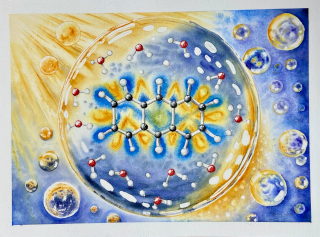
Including bulk solvation contributions during excited-state calculations.
During this lecture I will introduce several concepts needed for properly including solvent effects during excited-state calculations, considering ground-state absorption, fluorescence, as well as excited-state absorption. Various models and approximations will be presented and their adequacy discussed. During the subsequent computational class, the attendees will have the opportunity to test these models for both absorption and emission in a TD-DFT context, with simple examples allowing to relate the photophysical problem under investigation to the impact of methodological choices.
Workshop host: Professor Denis Jacquemin (Département Chimie, Nantes Université, France) Visit of Prof. Jacquemin is made possible by the EuroCC3 programme
|
 |
Rethinking Drug Design: From Classical to New Approaches. Computer-Aided Drug Design (CADD) plays a crucial role in modern therapeutic research by predicting pharmacokinetic properties and modeling drug-receptor interactions. This interactive workshop aims to introduce students and researchers to fundamental chemoinformatics and bioinformatics resources through practical, hands-on molecular docking studies. Participants will learn the essential steps of virtual screening by evaluating known inhibitors of Estrogen Receptor Alpha, a key therapeutic target in breast cancer. Attendees will prepare protein structures using the Protein Data Bank and Swiss-PdbViewer, perform energy minimization, and validate receptor structures using tools like ERRAT and PROCHECK. The workshop covers the complete docking workflow, including identifying bioactive ligands via ChEMBL, filtering molecules based on cytotoxicity profiles using AI models, and generating 3D conformers. Participants will configure and run automated molecular docking simulations using AutoDock Vina, followed by visualizing and analyzing protein-ligand interactions and binding affinities in Discovery Studio. Additionally, the session introduces DiffDock, a cutting-edge AI-based generative model, to compare classical approaches with new diffusion model methodologies. By the end of the session, participants will have practical experience in conducting virtual screening, understanding the inhibition of proliferative signaling pathways, and applying both classical and AI-driven computational methods in modern drug design. Workshop host: Dr Edgar Del Carpio (Central University of Venezuela; University of Wrocław)
|
 |
Drug discovery with your laptop. Participants will learn the basic concepts of structure-based drug discovery, including protein visualization, ligand binding, docking principles, and interpretation of docking results. Attendees will perform simple molecular docking experiments and visualize protein–ligand interactions directly in their web browsers without requiring prior programming or computational chemistry experience.
Workshop host: MSc Chaitali Barman (University of Wrocław) |